

Here’s the uncomfortable truth:
Most bands care way too much about their logo…
and almost nothing about everything else.
They’ll spend weeks tweaking a mark,
then drop it onto random cover art, inconsistent merch, and chaotic Instagram posts.
That’s not a visual identity.
That’s decoration.
And it’s exactly why most bands are forgotten visually, even if the music’s decent.
Because fans don’t remember logos.
They remember worlds.
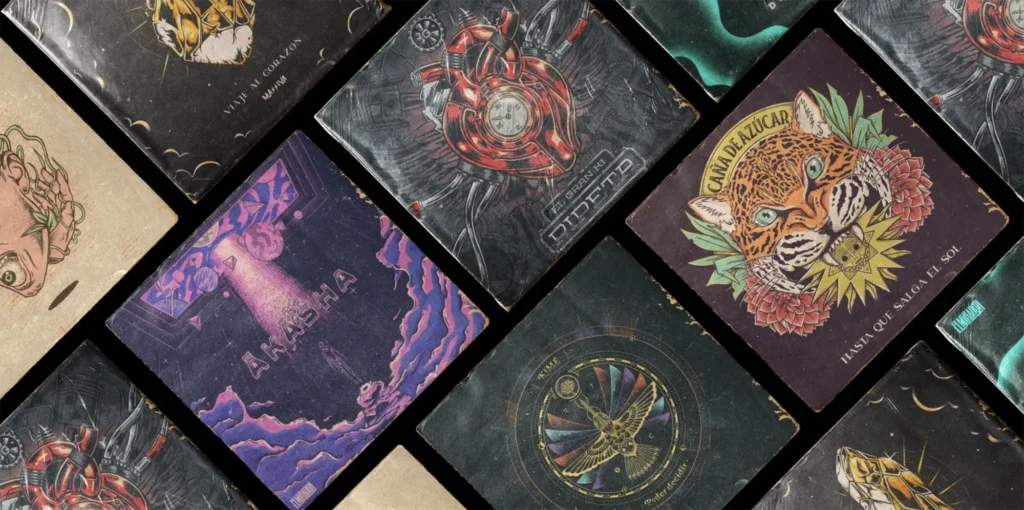
01. Cover Artwork Is Your First Impression (And Most Bands Waste It)
Your cover art isn’t just packaging.
It’s your entry point into someone’s brain.
And most bands treat it like a one-off creative experiment every release.
Different style. Different tone. Different everything.
That kills recognition.
What actually works:
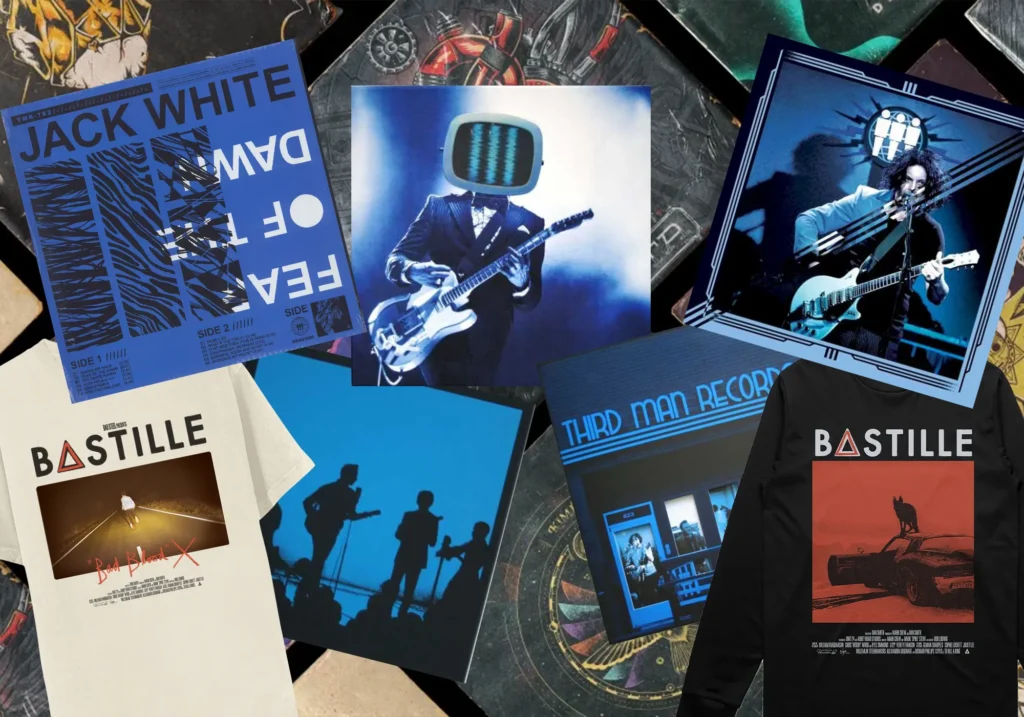
- A consistent visual language across releases
- Recurring elements (colour, texture, typography, composition)
- A clear “feel” that evolves, not resets
What bands get wrong:
- Chasing trends per release
- Letting different designers/artists dictate direction
- Treating each project like a clean slate
If your discography looks like five different bands made it…
you’ve broken your identity.
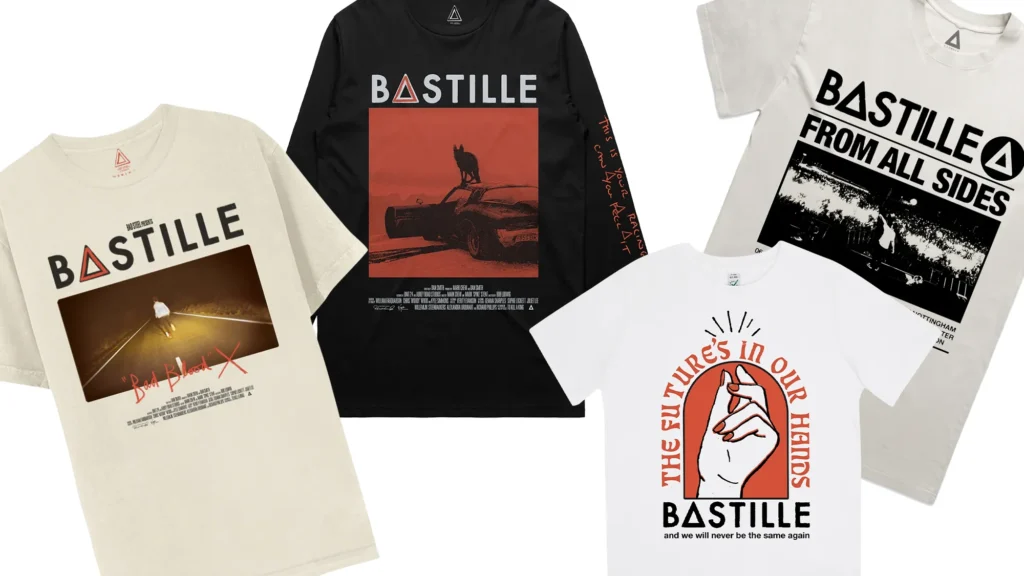
02. Merch Isn’t Extra Income, It’s Walking Branding
Most band merch falls into two categories:
- Generic logo tees
- Overdesigned graphics nobody actually wears
Both miss the point.
Merch isn’t for you, it’s for them.
Fans wear merch to:
- Signal identity
- Belong to something
- Represent taste
What works:
- Designs that stand alone as fashion
- Strong, simple graphics
- Pieces people would wear even if they didn’t know the band
What doesn’t:
- Slapping the logo on everything
- Cheap print-on-demand aesthetics
- No connection to your wider visual identity
If your merch looks like merch, it won’t get worn.
And if it’s not worn, it’s not marketing.
03. Social Presence: Where Identity Either Compounds or Collapses
This is where most bands completely fall apart.
They might have strong artwork…
but their Instagram looks like five different personalities running it.
Gig photos. Memes. Random clips. No structure.
Here’s the reality:
Your social presence is your most seen visual touchpoint.
What works:
- A defined visual direction (colour, tone, editing style)
- Repetition of key elements
- Content that feels like it belongs to the same world
What most bands do:
- Post whatever, whenever
- No visual consistency
- No thought about how it all connects
If your social feed feels random,
your brand feels weak.
Consistency isn’t restrictive, it’s what builds recognition.
04. Consistency Doesn’t Mean Boring, It Means Recognisable
This is where bands get defensive.
They think consistency kills creativity.
It doesn’t.
It gives creativity a framework to hit harder.
The strongest band identities:
- Have a clear visual system
- Repeat core elements
- Evolve without losing recognisability
Think about it like sound:
A band doesn’t change genre every song.
They refine their sound.
Your visuals should do the same.
If every release looks different,
you’re not evolving, you’re restarting.
And restarting kills momentum.
05. The Real Goal: Build a World People Want to Be Part Of
This is the shift most artists never make.
They focus on:
- Individual visuals
- Single drops
- Short-term hype
Instead of building something bigger.
A strong visual identity creates:
- Emotional connection
- Recognition without thinking
- A sense of belonging
That’s what turns listeners into fans.
And fans into advocates.
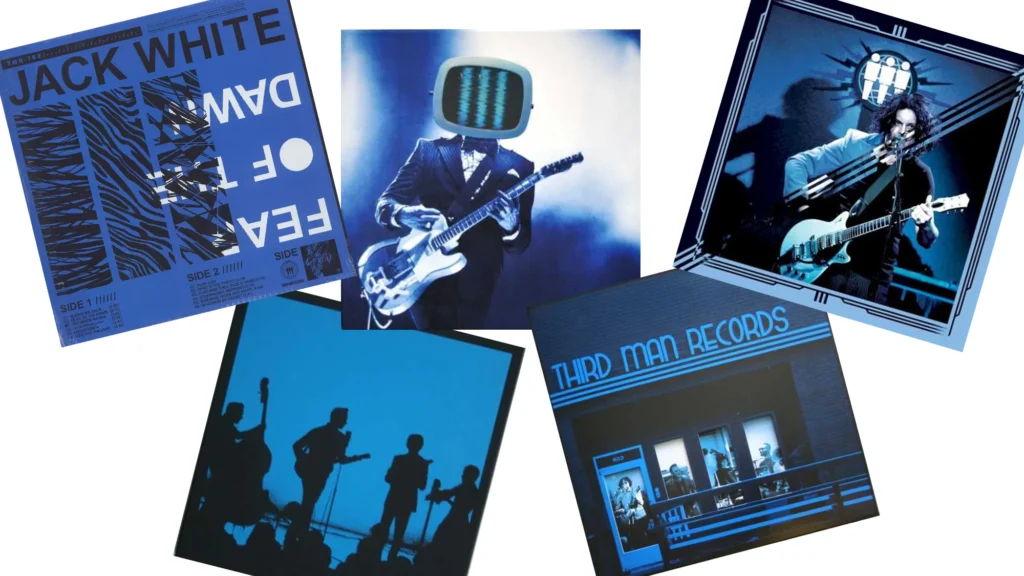
So What Actually Makes a Band Stick Visually?
Not a logo.
Not one great album cover.
Not a viral post.
It’s this:
- Cohesive artwork across releases
- Merch people genuinely want to wear
- A social presence that reinforces identity
- Consistency that builds recognition over time
That’s what compounds.
That’s what sticks.
Where This Connects to You
If your music is solid but your visuals are inconsistent,
you’re leaving growth on the table.
Because in 2026, people don’t just follow sound.
They follow identity.
Through Jack Tyler Design, I help artists and bands build visual systems that go beyond one-off designs, so everything connects, compounds, and actually builds something bigger.
Because the goal isn’t just to be heard.
It’s to be recognised instantly.